

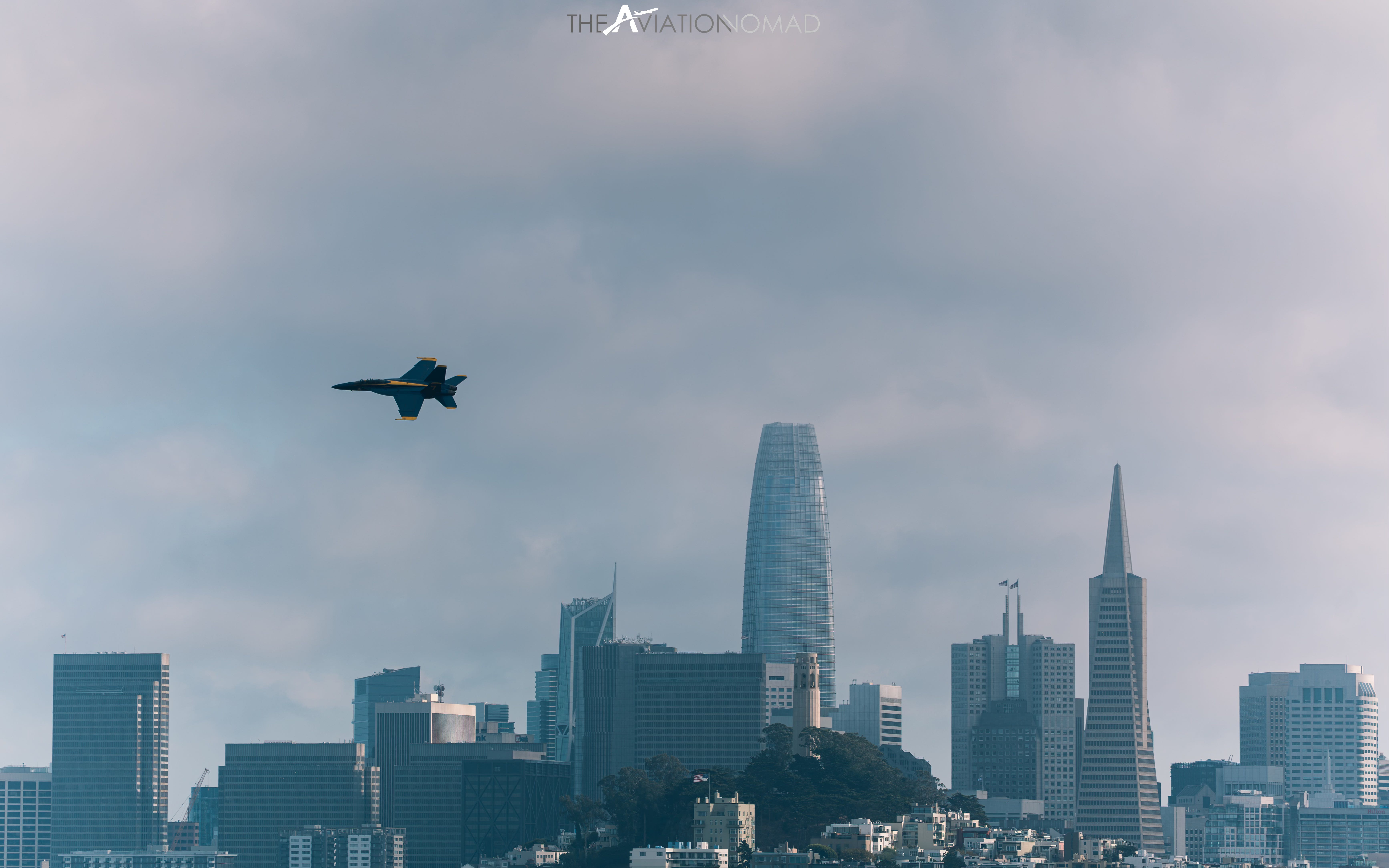
Gray skies, a procession of military vessels, and an air show that never quite unfolded as planned. On the opening Friday of San Francisco Fleet Week, the Bay delivered a reminder that even the most anticipated spectacles remain at the mercy of the elements.
San Francisco Fleet Week returned to the Bay on Friday with the familiar anticipation of military aircraft, powerful naval vessels, and thousands of spectators gathering along the waterfront. But this year’s opening day came with a significant complication: the weather had other plans.
Low clouds, fog, and poor visibility settled over the Bay Area, creating a gray backdrop for one of San Francisco’s most recognizable annual events. What was expected to be a full afternoon of aerial demonstrations became a different kind of experience — one defined by changing conditions, interrupted performances, and the patience required to photograph an event that refused to follow its intended schedule.
For photographers and aviation enthusiasts, Fleet Week is about more than watching aircraft cross the sky. It is an opportunity to capture military aviation against the Golden Gate Bridge, the San Francisco skyline, Alcatraz Island, and the distinctive landscape of the Bay. On Friday, however, the atmosphere itself became part of the story.
The Bay Before the Show
The day’s activities began with the Parade of Ships, bringing an impressive lineup of U.S. Navy, U.S. Coast Guard, and allied naval vessels through San Francisco Bay.
Moving along the waterfront, the ships offered a different kind of spectacle from the high-speed demonstrations normally associated with Fleet Week. Their scale, movement, and presence against the city provided compelling photographic opportunities, even beneath the overcast skies.
Among the vessels participating were the guided-missile cruiser USS Cape St. George, the amphibious transport dock USS Somerset, the amphibious assault ship USS Tripoli, Coast Guard cutters USCGC Bertholf and USCGC Munro, and the Royal Canadian Navy frigate HMCS Regina.
The San Francisco Fire Department’s fireboat added another visual highlight, sending powerful streams of water into the air as the vessels made their way through the Bay.
For those watching from the waterfront, the parade offered a reminder that Fleet Week is not solely an aviation event. It is also a showcase of the ships, crews, and maritime operations that form an essential part of the annual celebration.
Against the muted tones of the city and the water, the vessels stood out as the main characters of the morning.
When the Weather Changed Everything
The atmosphere surrounding the air show was noticeably different from the conditions spectators had hoped for.
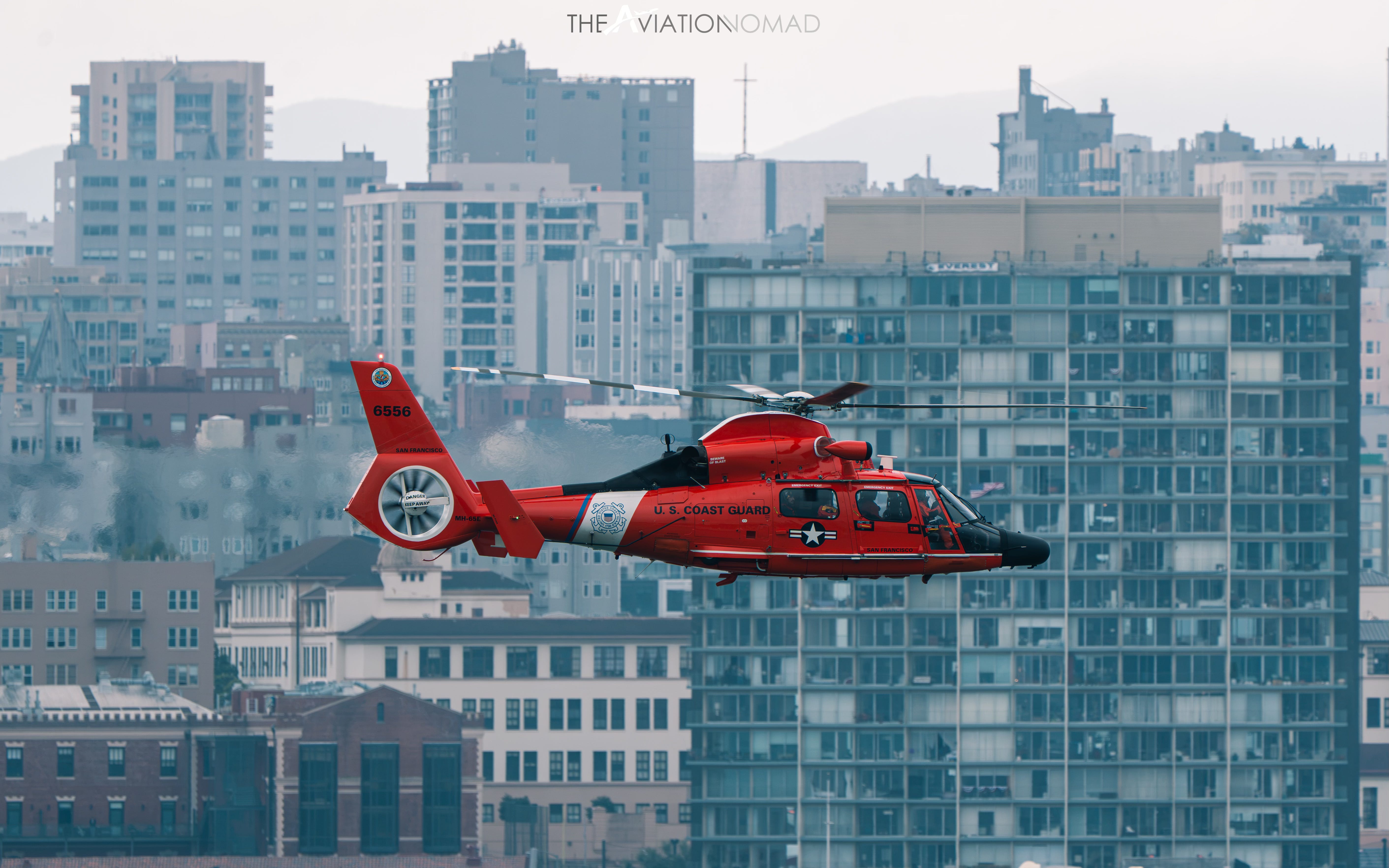
Fog and low cloud cover limited visibility across the Bay, obscuring parts of the surrounding landscape and creating uncertainty about how much of the scheduled flying program would be possible. The weather became the defining factor of the afternoon, affecting both the audience’s experience and the ability of performers to complete their demonstrations.
For aviation photographers, these conditions present a familiar challenge. The ideal image often depends on the relationship between an aircraft and its surroundings — a jet framed against the Golden Gate Bridge, a formation passing over the skyline, or a dramatic maneuver with the Bay stretching into the distance.
When the sky closes in, those opportunities become harder to find.
Yet overcast conditions can also change the character of a photograph. The softer light, muted colors, and atmospheric haze create a different visual language, one that can feel more documentary than spectacular.
Friday’s Fleet Week was a reminder that photographing aviation requires more than technical preparation. It also requires adapting to conditions that cannot be controlled.
The Blue Angels and a Performance Cut Short
The biggest disappointment of the afternoon came with the highly anticipated appearance of the U.S. Navy Blue Angels.
The team is the centerpiece of Fleet Week’s air show, drawing spectators from across the Bay Area and beyond. Their tightly coordinated formations, precision flying, and signature maneuvers are among the event’s defining attractions.
But the weather prevented Friday’s performance from unfolding as planned.
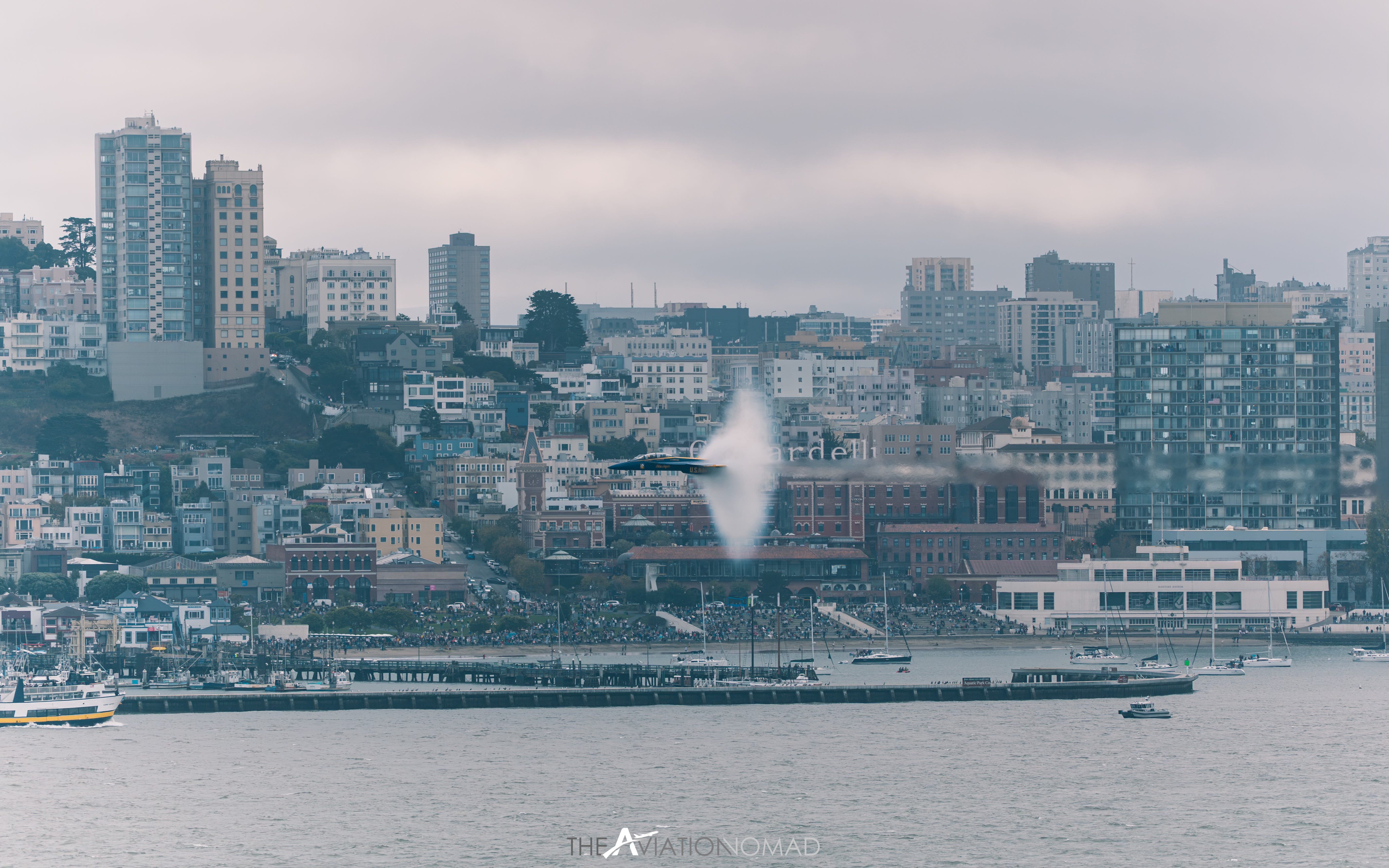
After a delay caused by poor visibility, the Blue Angels began flying at approximately 3:50 p.m. The team performed initial low-altitude formations before breaking away to assess the conditions. Additional flyovers followed, but the full demonstration — including the higher-altitude maneuvers audiences had come to see — did not take place.
The performance was curtailed shortly before 4:15 p.m., leaving spectators with only a partial version of the expected show.
Some civilian demonstrations were also canceled because of the adverse conditions.
It was a frustrating outcome for those who had spent the day finding vantage points, preparing equipment, and waiting for the aircraft to appear. For photographers in particular, the challenge was not simply that the show was shortened. The entire rhythm of the afternoon had changed.
There would be no guarantee of the planned formations, no certainty about which aircraft might appear next, and no assurance that the conditions would improve enough to deliver the images everyone had envisioned.
Safety, ultimately, had to take priority over the spectacle.
Photographing Fleet Week Beyond the Perfect Conditions
For me, Fleet Week is as much about the process of being out there with a camera as it is about coming home with a particular image.
The photographs from Friday included the Blue Angels, Coast Guard aircraft, and naval vessels, with the city and the Bay providing the backdrop. Some frames brought San Francisco into the composition, while others incorporated the Bay Bridge, giving the images a sense of place beyond the aircraft themselves.
Working in changing weather means adjusting expectations. The light is different, the background can disappear into the clouds, and the opportunities to capture a clean frame may be limited. Patience becomes just as important as camera settings.
There is also something compelling about documenting an event that does not go according to plan. The resulting images capture not only the spectacle but also the conditions in which it took place.
A Fleet Week photograph does not always need to show a jet performing a dramatic maneuver against a clear blue sky. Sometimes, a vessel moving through a gray Bay or an aircraft emerging through the haze can communicate the atmosphere of the day just as effectively.
The objective is to document what actually happened, not simply what was expected to happen.
A Disappointing Show, but Not a Lost Day
Friday may not have delivered the full aerial spectacle that many spectators anticipated, but it was far from a wasted day.
The Parade of Ships provided a substantial photographic opportunity, and the aircraft that did appear offered glimpses of the aviation program despite the difficult conditions. The atmosphere itself became part of the experience, shaping the way the event looked and how it could be documented.
Fleet Week is a reminder that outdoor events are never entirely predictable. Weather forecasts can change, cloud ceilings can remain lower than expected, and performances can be delayed, modified, or canceled when conditions are unsuitable.
For the people behind the cameras, the responsibility is to adapt and keep documenting.
The opening day of Fleet Week San Francisco did not follow the script. The fog took control of the sky, the Blue Angels’ performance was cut short, and some of the day’s planned demonstrations never materialized.
But the ships still moved through the Bay. The aircraft still made their appearances. And the waterfront remained a stage for one of San Francisco’s most distinctive annual traditions.
The weekend’s remaining air shows offered another opportunity for the spectacle to return, weather permitting. For those heading back out with cameras, the mission remained the same: find the vantage point, watch the conditions, and be ready when the next moment arrives.
Because in aviation photography, as in the event itself, the conditions are never guaranteed.
Photography: The Aviation Nomad
Story: Anouar M. / The Production Nomad
Independent Sports & Visual Media
San Francisco, California